Ancient Egypt
California History–Social Science 6.2
Ancient Egypt grew up along the Nile River. The Nile is a long strip of green farmland that runs through the desert. Every year the river flooded. When the water went down, it left rich black soil behind. The floods came at about the same time each year, so farmers could plan for them. At first there were two kingdoms. Upper Egypt was in the south, and Lower Egypt was in the north. Around 3100 BCE, a king named Narmer united them. Egypt's kings, later called pharaohs, ruled for about 3,000 years. Egyptians built pyramids and temples. They wrote with picture symbols called hieroglyphics. They also made a kind of paper from the papyrus plant. They believed in life after death, so they saved bodies as mummies. Famous rulers include Hatshepsut, who grew Egypt's trade, and Ramses II, a great builder. Much later, the Rosetta Stone helped people learn to read hieroglyphics again.
Cards in this unit
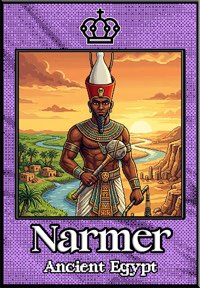 NarmerPolitical
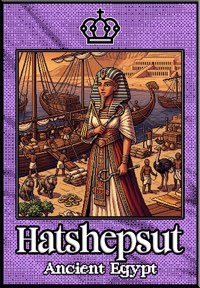 HatshepsutPolitical
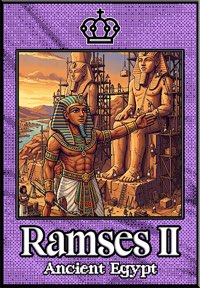 Ramses IIPolitical
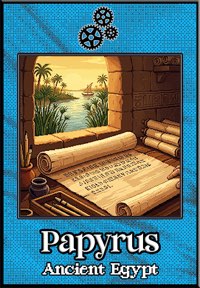 PapyrusScientific
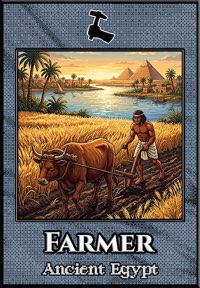 FarmerLabor
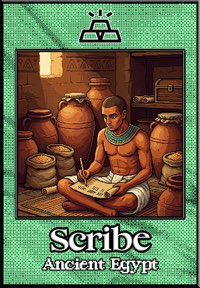 ScribeEconomic
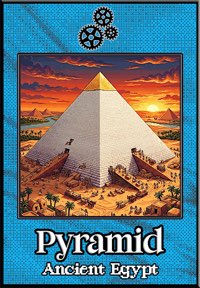 PyramidScientific
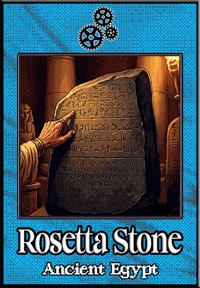 Rosetta StoneScientific
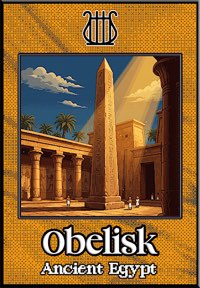 ObeliskCultural
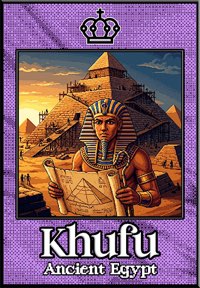 KhufuPolitical
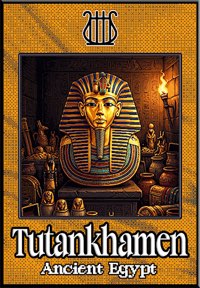 King TutankhamenCultural
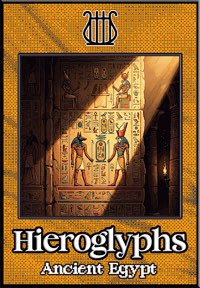 HieroglyphicsCultural
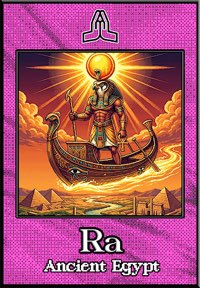 RaReligious
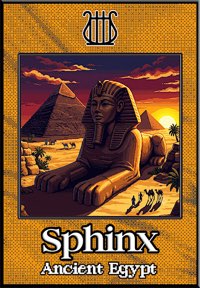 SphinxCultural
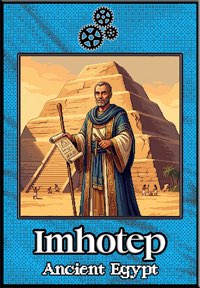 ImhotepScientific
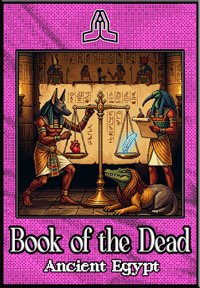 Book of the DeadReligious
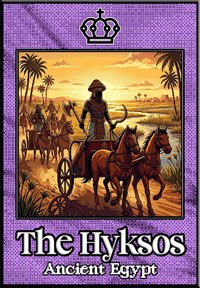 HyksosPolitical
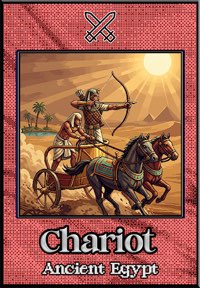 ChariotsMilitary
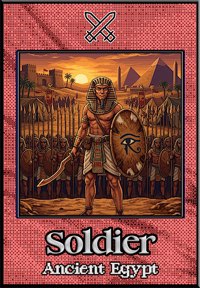 SoldierMilitary
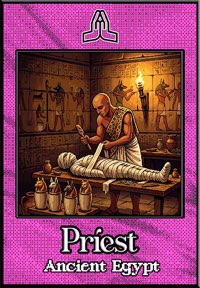 PriestReligious
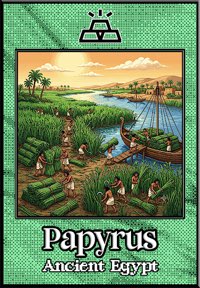 PapyrusEconomic
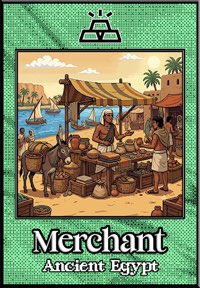 MerchantEconomic
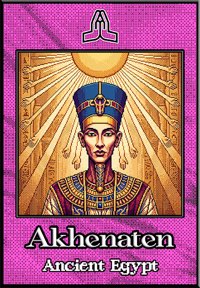 AkhenatenReligious
Students earn all 23 of these cards in the game. Cards with a gold frame have their own page.
For teachers
This unit covers the Egypt part of CA HSS 6.2:
- the Nile and its floods
- the unification of Upper and Lower Egypt
- pharaohs and religion
- pyramids and temples
- hieroglyphics and papyrus
- trade under Hatshepsut
- rulers such as Ramses II and Akhenaten
Kush, the rest of 6.2, is the next unit in the game.
California History–Social Science 6.2